 |
|
|
|
|
||
|
Latest News "Essential Books" Click here
|
Lima Portrait Onzas (1751- 1821), a brief collector’s guide
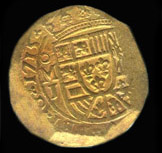
The Spanish Colonial mint at Lima struck milled Portrait onzas for a span of 71 years. Production began in 1751, replacing the gold cobs Lima had struck since 1696. Production ended in 1821 when Republican forces seized control of Lima. The bust portraits of four Spanish monarchs, Fernando VI, Carlos III, Carlos IV and Fernando VII, graced the obverses of these attractive large gold coins, defining the four major types of Lima Portrait onzas. Portrait onzas of Fernando VI were struck for nine years, 1751- 1760, including the posthumous issue of 1760. There are three significant sub-types of Fernando VI onza. Portrait onzas of Carlos III were struck for thirty years, 1760- 1789, in four main sub-types. Portrait onzas of Carlos IV were produced for twenty years, 1789 to 1808, in two sub-types. Portrait onzas of Fernando VII were struck from 1808 to 1821 in four significant sub-types. A complete type set of the major varieties of Lima portrait gold thus comprises thirteen gold issues. All of the varieties are collectible, though several are rare and very rare in choice uncirculated condition. Several collections assembled in the last 20 years have done a good job in locating Lima Portrait type as part of their wide-ranging Spanish Colonial collections, but the definitive collection of Lima Portrait gold is yet to be formed.
1. Lima Portrait onzas from 1751 to 1760, reign of Fernando VI a. the imaginary bust of 1751-53, INITIUM motto of Felipe V, assayer J b. the new bust of 1754-56, NOMINA motto, assayers JD and JM c. the new bust with modified reverse, 1757-60. The issues of 1760 are posthumous. Assayer JM for all issues.
The mechanization of production and the new portrait types ordered by Felipe V finally appeared at Lima in 1751--a mere 20 years after they had been installed at Mexico City. The Lima mint had been ruined in the earthquake of 1746 and had struggled to continue to produce gold cobs through 1750. When new dies arrived for the portrait gold and columnarios silver on October 31st, Lima had only one mill and 3 screw presses in operation. Nevertheless, Lima managed to produce a substantial gold coinage (and a respectable silver coinage) in the last two months of 1751. For the first three years of production (1751-53) the Lima onzas displayed a unique portrait that did not resemble Fernando VI. They also carry the motto of Felipe V, INITIUM SAPIENTIAE TIMOR DEI. This has not been adequately explained. Some authorities say the portrait looks like a reworking of a Mexico City late Felipe V portrait. This makes sense if Lima’s first dies came from Mexico City, and the Mexican mint felt free to recycle some of its unused but obsolete dies to Lima. For whatever the reason, this “imaginary” type persisted for 3 years—perhaps the longevity of the original shipment of dies-- with healthy mintages in 1751-52 but declining production in 1753. The 1753 J onza is certainly rare in mint state. In 1754 Lima began to strike its gold coinage with a new true portrait of Fernando VI. The long curly hair of the king’s wing was a unique stylistic treatment apparently from the Lima die cutters. Fernando’s motto NOMINA MAGNA SEQUOR appears on the reverse. Low mintages for years all three years,1754-1756, insured that this type would be hard to find 250 years later. Any 1754-56 Lima onza in Choice AU or better is genuinely rare. 1755 may be slightly more available than the preceding and succeeding years. In 1757 the reverse design was slightly modified without changes to the obverse. On the chain of the Order of the Golden Fleece, the Maltese cross had hung below the Golden Fleece. Now that order was reversed, with the Fleece hanging from the Cross. Fernando VI had ordered this change the previous year, and Guatemala and Bogota had complied immediately. Production rose somewhat in the period 1757- 1760, making this final sub-type of Fernando VI certainly more available than the issues of 1754-56. Once again, all true mint state coins, especially those without adjustment and other planchet problems, are rare.
2. Lima Portrait onzas from 1760 to 1789, reign of Carlos III a. small “local” bust of 1761-62, NOMINA motto, assayer JM b. standard young bust of 1763-68, reduced module in 1767-68, assayer JM c. modified bust of 1768-72, asayer JM d. new official bust, value mark of 8 S added to reverse, 1772-89, assayers JM and MJ, MI and IJ.
In the absence of dies and directions from Madrid, Lima began its coinage in the name of Carlos III in 1761 using a locally designed portrait of the new king. The rendering bore little resemblance to Carlos III except for a free interpretation of Carlos’ large nose. Fernando’s motto NOMINA MAGNA SEQUOR remained on the reverse. This design was continued for the succeeding year. Both 1761 and 1762 were low mintages and all surviving specimens of this type are rare. Muy rara, according to Calico. In early 1763 new dies with a youthful bust of Carlos III arrived from Spain. Carlos’ motto IN UTROQUE FELIX AUSPICE DEO appears on the reverse. These designs continued in use until 1768, though in 1767 the module of the flan was reduced and the scale of the coin changed slightly in response. The reverse in particular seems smaller. All of the 1763-68 youthful bust issues are rare, the 1768 very rare. No specimens are known in above Choice AU condition. Late in 1768 new dies with a modified portrait of Carlos arrived from Spain. One was used to strike a few issues in 1768. These are very rare. The type continued for 4 more years into early 1772, when the final official bust of Carlos III arrived from Spain. All issues of this 1768- 1772 type are rare. No true mint state coins may exist. In early 1772 the final type of Carlos’ reign is introduced and simultaneously mintages begin to improve. The new mature official portrait is paired with a reverse showing a valuation of 8S. These stylistic improvements disguise a secret debasement of the coinage. Assayer JM alternated the position of the mint mark in 1772-73 to the right or left of the Fleece, creating a minor variety. 1772 remains a very difficult year for collectors, but thereafter things improve. No dates between 1773 and 1787 are truly rare, but 1773, 1775, 1779, 1783-85, and 1788-89 are certainly difficult. Calico considers 1779 and 1785 rare.
3. Lima Portrait onzas from 1789 to 1808, reign of Carlos IV a. Bust of Carlos III, 1789-91, assayer IJ b. standard bust of Carlos IV, 1792-1808, assayer IJ and JP
After the death of Carlos III in 1788, colonial mints received instructions to continue to use his effigy until new portrait punches came from Spain. For Lima this apparently did happen until three years later. Lima onzas struck in 1789-91 continue to show the bust of Carlos III, but in the legend his son is identified as the new monarch, CAROL. IV. Many dies show a numeral IV re-engraved over a III, suggesting that the mint officials at Lima were perhaps not in a hurry to discard expensive obsolete dies. The posthumous bust issues of 1789-91 are not rare, but condition remains a problem. True uncs are certainly rare. After the official bust of Carlos IV was put into service on issues of 1792, the new type that persists for the rest of his reign. All dates in the era 1792-1808 are available in circulated condition. 1797 JI and 1804 IJ are rare assayer combinations. Problem-free, choice mint states coins for any date of this type are hard to find.
4. Lima Portrait onzas from 1808 to 1821, reign of Fernando VII a. imaginary bust if 1808-11, assayer JP b. large laureate bust of 1812 from 8 reales punch, assayer JP c. smaller laureate bust of 1812-13 d. undraped bust of 1814-21
Turmoil in Spain—Fernando was forced into exile by the Napoleonic occupation of most of his country—made it impossible for Madrid to ship new portrait dies and punches to her New World colonies. Lima and some other mints resorted to creating an imaginary portrait of Fernando VII for the new monarch’s coinage. At Lima this imaginary bust continued on the gold coinage for four years, 1808-1811. None of the issues of 1808-1811 are rare, but a great many show serious planchet problems. Problem-free mint state coins are very hard to find. Lima finally began receiving punches from Spain in 1811, but at first only for the silver issues. Unwilling to delay gold production in 1812, Lima mint officials simply decided to create the onza die using the 8 reales portrait punch. The result was an obverse design in which the laureate bust of Fernando VII barely fits the coin. A sizeable montage was apparently struck with this expedient design. The issue is rare or nearly so. No uncirculated specimens seem to have survived. Later in 1812 Lima officials got the idea that the 4 reales bust would look better on the onza and switched to that punch for the rest of the year and all of 1813. This type is “muy encasa” in Calico judgment, very scarce. High grade specimens are rare. Finally, in 1814, an apparently official portrait of Fernando arrives. The laureate style is retained but Fernando’s bust is now shown undraped. This style persists until Royalist gold coinage ceases at Lima. When Royalists temporarily regained control of Lima in 1823-24, a silver coinage was restored but no gold was struck. This last type of Lima onza is available for all years 1814-1821, but the 1821 at least in quite scarce. A few choice specimens do exist.
|
